Jack McCausland


Jack McCausland
Photography, Graphic Design, Media
As this project is all about tea, I have set myself out to discover and research where tea has original came from, why it’s so popular, and how people used it; then and now. This’ll mean I can then have a wider range of knowledge, to go towards my developments and final outcome.
To see original research of tea, click here!
To be sure that I make a succesful, good looking finished product, we firstly took out a session of buying a bunch of things from anywhere, and take note of the things we'd buy without question. After this, we all asked why we bought these; weather it was becasue of the good looking packaging, the quality, the price, the company, the feedback or because of the popularity.
With most of my products, I saw my self going for the more expensive, high quality product, where there would be cheeper options.
Personally, I think that buying and consuming a higher quality product - opposed to a cheep option - provides yourself with the expierience of properly tasting the product.
For example, when I came to buying 'cola', as we all know, theres the well known CocaCola, Pepsi, Dr Peper, and other cheep 'rip offs'. However, I found myself going for the slightly more expensive CocaCola Bottles.
There's something about packaging which presents itself to be so much nicer than consuming it in a cheeper can, or a larger, plastic, 2 liter option. I felt that buying these cola's in original glass bottles meant that I could taste what Coke wants us to taste, see what Coke wants us to see, and expierience what Coke wants us to expierience. This is why I, personally, would go for the slightly more expensive (higher quality) product, over the cheeper version.
This is something I'd deffinitly reflect in my completed tea packaging. Obviously this would be an important thing to consider, as this is something which is going to be sold in Specialist stores and not in everyday supermarkets, containing other cheaper brands. As this is for a gift, I think I can afford to put the price up for my product, and invest into higher quality materials, and an 'uneccasery' design. Money is not my priority. On the other hand, quality is.


Although I am the one who's designing my own product, and I will be the one developing my own ideas, other people's opinions and ideas are just as important. Saying this, I noticed that in this excersize, there are 3 different types of people, and different techniques of shopping.
The Expencers: People who chose quality over anything and everything. Money doesn't matter when shopping, all that matters is how good the product is going to be, and where it's came from.
The Cheep'n'Cheerfulls: The people who invest into the cheeper options, for example, buying the large, plastic 'cola' bottles made by *chosen store*, opposed to the smaller portions of one of the well known brands, such as CocaCola.
The Mainstreams: Although quality is a priority, they will still consider investing into cheeper - yet functional - bargins.
I think that I'll be aiming at the slightly higher quality, 'on the expensive side' of things when I come to make my tea packaging, as this is for a gift, and, who wants a cheep house warming or weddings gift? Not me!
I had a look around different websites to see the power of branding, why it's so important, why it should never be underestimated, and also saw some great examples of how effective it can be!
The Design Council was such a great source for this, and explained everything about branding. The perks and the cons:
http://www.designcouncil.org.uk/news-opinion/power-branding
http://www.creativebloq.com/product-design/examples-industrial-design-12121488
http://www.bbc.co.uk/schools/gcsebitesize/art/practicalities/annotatingevalyourwork2.shtml
http://themindlab.co.uk/three-key-principles-of-effective-packaging-design/#.Vq0HAoTiyJh
PACKAGING

For a start, I decided to look at the basic of them all. Althought I chose to look at the cheeper side of things, I thought it'd be a good idea, so I could understand how packaging develops when costs increase.
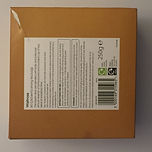

Firstly, I chose to look at Waitrose' 'basic' tea. Selling at roughly £2.29 (91.6p per 100g) for 80 bags, personally, I think this looks very appealing. At first, the packaging presents it's self in a way which - although it's low price and marketing - still looks classy. The use of less infomation on the front, gives the impression of less fuss; meaning all you're buying is basic tea bags and tea bags only, you aren't investing into something expensive, from a well known company specialising in tea bags, but you're being safe, by buying these. And thats exactly what I think the 'basic' range should do.
I looked further into the packaging to get an idea of how it was put together, and how they made it.
As I looked towards the inside of the packaging, and the contents, I realised how simple, this product was.
A simple net, a simple - yet different shaped - tea bag, and a foil packaging (x2).
Firstly I looked towards the net, to look for how this price range boxes their products. I could have guessed by the outside, how this was going to come apart, and it was just that.


As guessed, the packaging - once layed out - is the most simplist nets of them all. There's nothing wrong with this at all (for this price range). It containts the tea, therefore, does the job. Again, refering back to the 'basic' side of things, when people are looking to buy this, they aren't looking for some tea which shows off and presents it's self glamorously within a finely crafted box, nor are the buyers looking for something to keep forever, and keep on refilling, of corse not! it's a simple buy, drink, throw. No fuss.
I liked the fact that they included a foil package for the tea bags specifically. Although some tea bags do include this, I wouldn't have inspected this to be part of the 'basic' range. So it still shows that although thepackaging on the outside is exactly top of the range, they still care about how the tea is kept, until it has been drunk. I think I would like to involve something like this in my packaging, although this is something which is included due to poor or thin packaging (card), and I will want mine to be thicker on the outside, therefore unneccasary to use foil, but I'll think about that in my developing work.
The second packaging I had a look at was a slightly more up market tea bag. Althought this brang - Twinings - are also sold within the supermarket alongside all the other brands, Twinnings are a company which specialise in tea production and selling, and this became very clear to me as I started looking deaper within the packaging, compared to the lower priced Waitrose product.
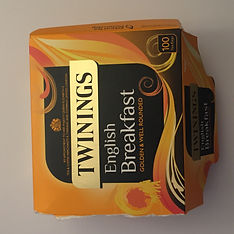


This product normally ranges around £6.50 for 100 bags. Instantly, looking at the price, you get the idea that this isn't exactly the cheap thing to buy, however, it still isn't top of the range.
For the obviouse reasons, when you buy something for more, when there is a cheeper option, the money you spend extra (on the higher brand) goes towards packaging; more thought, process, and technology in the way it's put together and the design on the box. The brand; as this is a well known brand, and specialises in tea, it's going to do it right, and proper. Twinings aren't messing about. The quality; along with their big name, they should naturally care about quality. This means the quality of the packaging, the branding, the expierience, and the taste of the tea itself.
Anyway, enough of that talk! I took it all apart to have a look at how this package was put together.


As I took it apart, it was obviouse that this brand was and package design was a cheap product, nor did they want their customers to see it that way.
I see they're gone for a kind of tissue box approach, with a lid and everything. I quite liked this idea, as it's easily kept, stored, accessable, and also reusable, if you wish?
Although there was no foil packaging like the lower price range product, the card was a tiny bit thicker, and less easy to bend or break, for that matter, which maybe meant there was no need of extra foil packaging.
What were the advantages/disadvantages of using higher quality materials opposed to lower?
By looking and understanding how this was put together, and what materials was used, I think that quality of build isn't an assential, but it is deffinitly something which might attract one kind of audience, and repel others. As they're a company commited to tea, then quality will most definitly be a huge factor of their products and marketing, as this will build up their reputation.
How ever, stating the obvious, higher quality packaging will mean higher costs, which could lose quite a lot of the customers who prefer putting their money into the thing they're going to consume, rather than look at.
But looking at it as it's a gift, I think that both quality and appearence is important, and cost wont hugely matter, however, this doesn't mean that it can cost a lot.
I think, also the fact that special occasions (which require gifts to be given) won't happen daily, therefore, the expence of a certain product, won't matter as much, opposed to something (tea) which you might buy daily.
However nice this product is in taste, and appearence, this still is something which you'd get strange looks at if you were to give it as a wedding gift.
I mean, say no more.
So, I went for something a bit more upmarket, something which I'd be looking at creating my self.

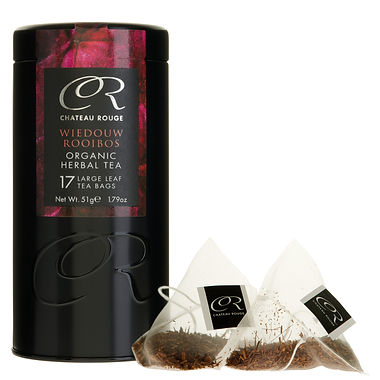
I had a look on the line, to see other companies who supply high qulality, luxury products. Although I couldn't have this infront of me at the moment, I have a fairly good idea of what it's like.
Instantly, I noticed the material that the product is made out of. a metal, cylinder tin with an easy access screw off lid, this is almost the perfect package for a higher quality tea product. Im sure this will keep the tea the right flavour and texture almost for ever, compared to the other two products which were kept in cardbored / foil.
Everything about this product - to it's glossy, metalic black finish, it's type face, it's colours, flavours, logos and tea bag shape and content shout out the the customer that this wasn't a waste of money. This is probably the first tea product of them all, which I think that this would be a suitable gift. I mean, I'm not even a person of whom is mad on tea, yet I don't think I'll freak out when and if someone presents this to me for my birthday or such.
Although the 'three in one' package is not available yet, the taller, bigger packet is available for roughly £7 a tin. This includes only 17 pyrimid tea bags, each with labes and each with 3 grams of tea!
Stating the obvious, but this is not a cheap and cheerful thing to buy on a casual basis.
As I've looked at all 3 different types of tea products, I think I've got a general idea on how these products are made and sold, specifically to their chosen audience, for very different prices and occasians.
Starting from bottom to top;
Waitros brand tea:
revetively cheap
simple, basic shapes and backaging
80 circle tea bags
Twinings tea:
Higher qualiy packaging
more complex net
more graphics on packaging
higher price compared to Waitros
WIEDOUW ROOIBOS:
Premium quality
Reusable / re fillable
only 17, high quality, pyrimid tea bags
Metal tin
dark, glossy, classy finish
Out of all of these points, im definitly looking toward the Rooibos product for inspiration and idea on packaging
and branding, as I think this is more of a suitable product to give as a gift for a special occasion, and definitly not something to drink everyday
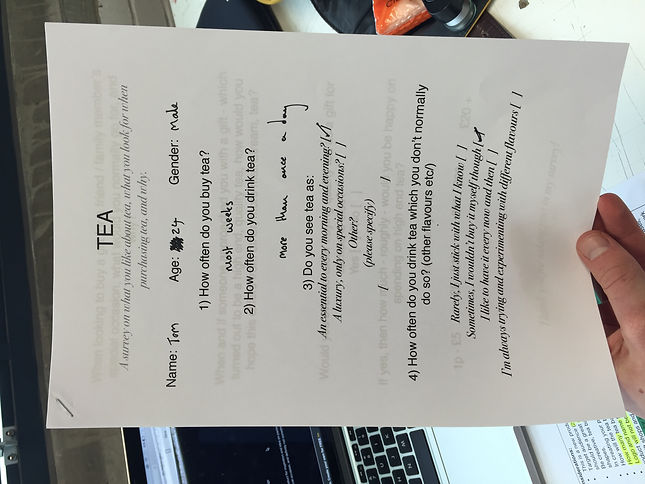
I made a questionnair to explore what people - ages between 20 and 35 (target audience) - like about tea, why they like it, and why they'd look to purchase it for them selves or maybe as a gift for a friend.
These set of questions made it clear that tea is most commonly drunk as a casual drink through out the day.
As shown through the asnwers I got on the survey, although tea is a common favourite, and is consumed daily, people wouldn't jump to buying tea for someone's special occasion, yet wouldn't mind it if they recieved tea as a gift from someone else. It was also commonly stated - in the feedback I got - that quality, fair money distribution, and high quality and eco friendly packaging was important, as they wouldn't want an expensive selection of tea, to be cheaply harvested, and bulk made, but actually be cared to each and every package.
My survey proves that people are willing to pay a high price for a good quality set of tea flavours, but also that it is important that this specific tea product has something different to offer whe compared to normal everyday tea, such as 'quirky features, nice packaging, and completely different flavours', quoted by Amy age 29.
Another thing which has came up in most of my surveys, was packaging. It has been proven that packaging - above all - is most important when selling an expensive product. They expressed that they'd want high quality looking tea, instead of something which has came out of a factory, made in bulk.
What I've learnt from this survey, is that although people are willing to purchase a high quality tea product for a gift, they have to be convinced into buying it. Through my packaging, I have to give reasons to why they should buy it as a gift, why it'd be a great present, and why they wouldn't regret it. I will look more into my packaging, and how I can make it more of a high class, expensive gift.